Skip to content

Melbourne Emergency Plumbing

Emergency Toilet Repair Melbourne

Overflowing pan, dead cistern, sewage smell — fixed fast, usually in one visit.

  • Blocked toilet clearance — mechanical, without lifting the pan where possible
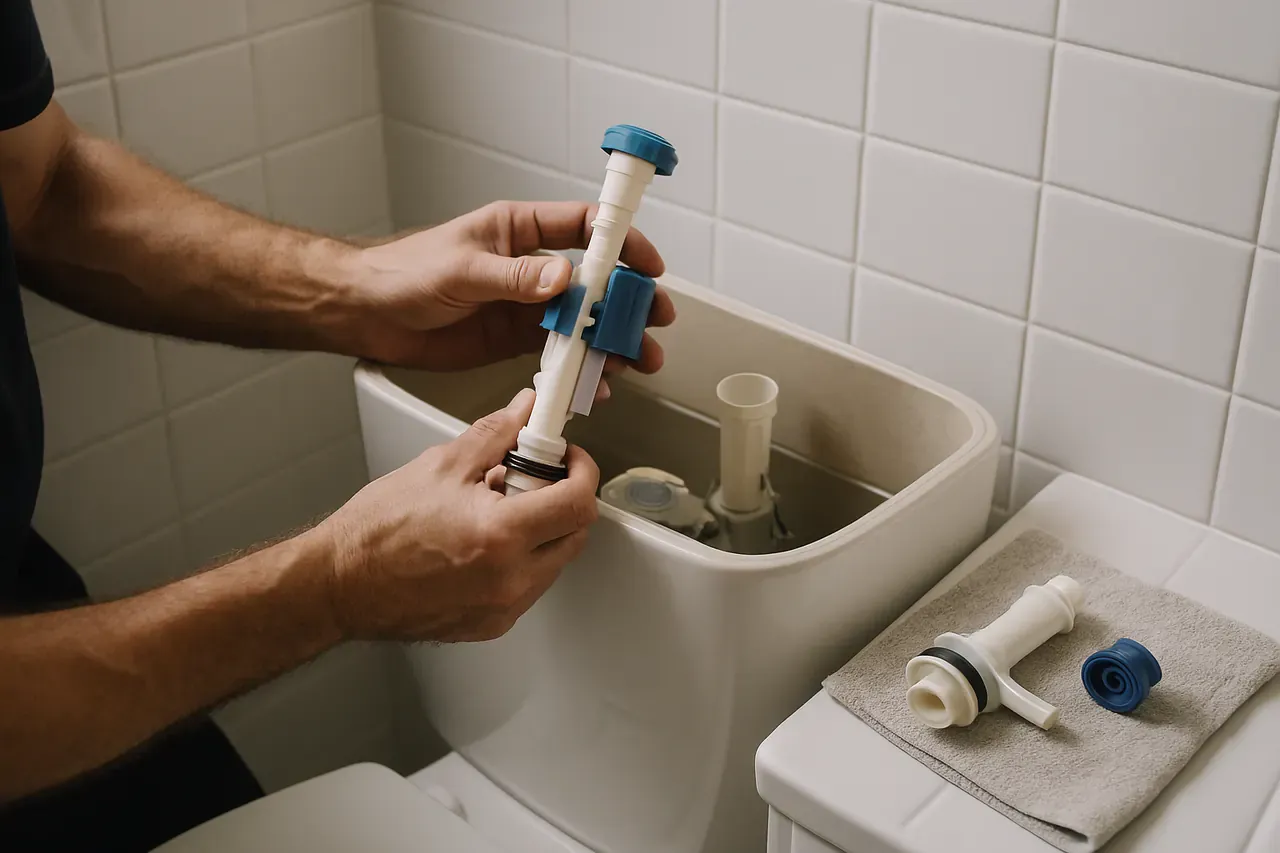
  • Cistern repairs: inlet and outlet valves, buttons, internals carried on the van
  • Leak repairs: pan-to-floor seals, cistern connections, running toilets
  • Cracked pan and cistern replacements, like-for-like or upgraded
Call 0468 022 662 Get a free quote
  • Licensed plumbers
  • Direct to the plumber
  • 24/7
  • Quote first

Free quote: Emergency Toilet Repair

Australian format - we'll text you the quote and ETA.
Add brief description (optional)
How urgent?

Free, no obligation. A licensed local plumber replies as soon as one is available. Privacy.

Emergency Toilet Repair Melbourne: the short answer

For an overflowing toilet in Melbourne, turn off the small tap behind the cistern and do not flush again. A licensed local plumber clears a blocked toilet or replaces failed cistern internals ($220-380) in one visit at $130-170 an hour, any hour, with no call-out fee; a like-for-like pan and cistern replacement is $850-1,800. If the shower or floor waste gurgles too, the blockage is in the sewer line and is treated as a sewer emergency.

Updated 21 September 2026

Emergency Toilet Repair Melbourne — Overflowing pan, dead cistern, sewage smell — fixed fast, usually in one visit.

What's included with every emergency toilet repair melbourne

Every job includes the basics below — no surprise extras tacked on when the invoice arrives.

  • Blocked toilet clearance — mechanical, without lifting the pan where possible
  • Cistern repairs: inlet and outlet valves, buttons, internals carried on the van
  • Leak repairs: pan-to-floor seals, cistern connections, running toilets
  • Cracked pan and cistern replacements, like-for-like or upgraded
  • Sewage smell diagnosis — seals, dried traps or venting, found properly
  • Owners corporation documentation where the fault sits in shared pipework
  • Guarantee on the work as offered by the plumber — ask before work starts

When to ring us

Signs you've got an emergency on your hands

Not sure if it's urgent? If you're seeing any of the below in your Melbourne home, don't wait — small problems become expensive ones inside hours.

  • Toilet overflowing or rising ominously toward the rim on flush
  • The only toilet in the home blocked or unusable — that's an emergency by definition
  • Toilet running constantly — quietly adding hundreds to your water bill
  • Water pooling at the base of the pan after flushing
  • Sewage smell in the bathroom that cleaning never fixes
  • Cracked pan or cistern, or a toilet that rocks on its base

How we fix it

About this service in Melbourne

Small fixture, outsized emergency

No fixture punches above its weight like a toilet. A failed hot water unit is uncomfortable; a failed only-toilet is a household standstill, and an overflowing one is a health issue spreading across the bathroom floor. That’s why toilet calls get triaged on two questions: is sewage escaping, and is it the only toilet in the home? A yes to either moves you to the front of the queue, any hour.

The mechanical reality is friendlier than the panic. The overwhelming majority of toilet emergencies resolve in a single visit, because toilets fail in predictable ways — blockage, valve, seal, crack — and the parts for three of those four ride on every van. Common cistern internals, inlet and outlet valves, buttons and seals cover most of what Melbourne’s bathrooms run, from new apartment suites to the older units in St Kilda’s flat blocks.

When the toilet is the messenger, not the problem

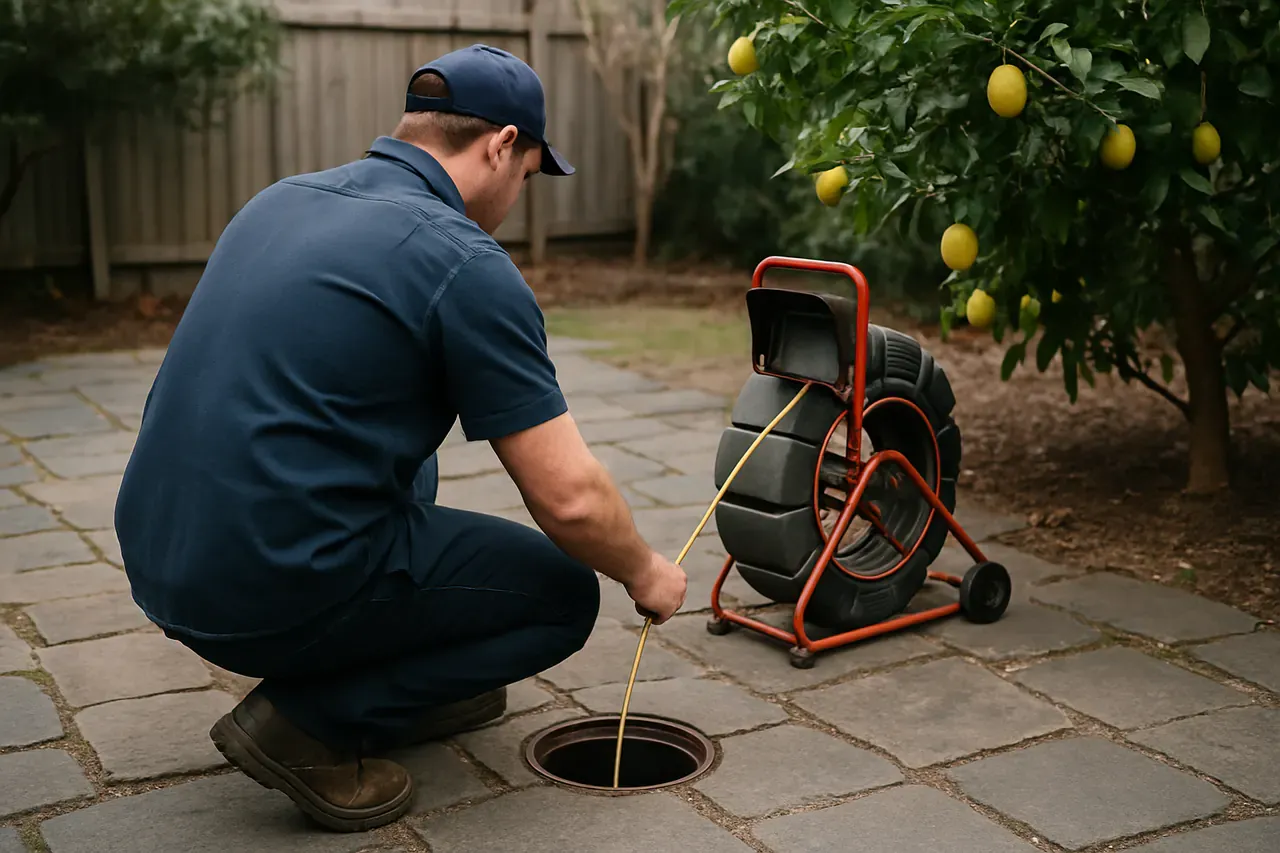
The diagnostic fork in every blocked-toilet job is whether the blockage lives in the pan or past it. A one-off paper-and-wipes plug in the S-bend clears mechanically in minutes. But a toilet that blocks repeatedly, gurgles when other fixtures drain, or backs up alongside a slow shower is delivering a message from further down the line — typically Inner Melbourne’s signature drainage faults, tree roots in century-old clay branches chief among them. In those cases we say so plainly and recommend the camera inspection, because clearing the pan a third time is billing you for a fix we know won’t hold. The full story lives on our blocked drains page.

Apartment buildings add the ownership question: a toilet backing up because a shared stack is blocked isn’t your repair to fund. We document the fault location — with camera footage where needed — so the owners corporation portion goes to the OC. Faults past the property boundary belong to the water authority, such as Yarra Valley Water. In older subdivided buildings around St Kilda and the inner north, where improvised branch pipework is common, that distinction routinely saves residents real money.

The quiet failures worth fixing cheap

Two toilet faults never feel like emergencies and cost more than most: the constantly running toilet, drizzling hundreds of litres a day onto your water bill, and the slow leak at the pan base, quietly soaking the floor structure underneath. Both are quick, inexpensive repairs. Both, ignored for a year, mature into rotted flooring or a startling bill. Damp timber also breeds mould, which the Department of Health links to respiratory symptoms. If this page catches you researching one of them at a calm moment — book the business-hours slot now, while it’s still the cheap version of the problem.
Our process

From quote to repair — four clear steps

Repair workflow

Emergency Toilet Repair Melbourne

  1. 1

    Step 1

    Stop the overflow

    Guidance first, by text or phone: close the cistern tap (usually at the wall beside the toilet) and don't re-flush. Sewage risk moves you up the queue.

  2. 2

    Step 2

    Diagnose the real fault

    Blockage in the pan, the branch or the mains line? Valve, seal or crack? A toilet symptom is often a drainage story — we establish which before quoting.

  3. 3

    Step 3

    Fix same-visit

    Vans carry the common cistern internals, valves and seals, so most repairs finish in one visit. Replacements are quoted fixed-price with same- or next-day install.

  4. 4

    Step 4

    Test and tidy

    Multiple test flushes, seal checks, base inspection, area cleaned and disinfected where sewage was involved. Invoice and warranty terms emailed.

Every job is done by a licensed local plumber. Guarantees on the work are offered by the plumber who does the job — ask before work starts.

Real Melbourne rates

What you can expect to pay

Honest pricing based on actual Melbourne market rates. Final quote always confirmed in writing before any work begins — no hidden call-out tricks.

Job typeMelbourne range (AUD)
Blocked toilet clearance (mechanical)$160-380
Cistern internals replacement (inlet/outlet valve, button)$220-380
Running toilet repair$160-320
Pan-to-floor seal replacement$250-480
Full toilet suite replacement (like-for-like, installed)$850-1,800

Ranges reflect typical Inner Melbourne pricing for 2026. Standard hourly: AUD 130-170. After-hours convenience bookings: AUD 190-320.

Where we cover

Emergency Toilet Repair Melbourne — by Melbourne area

Same service, same prices, across our Inner Melbourne coverage. Some regions have local quirks worth knowing about — tap your area below.

Common questions

Emergency Toilet Repair Melbourne — your questions answered

  • My toilet is overflowing right now — what do I do?
    Don't flush again — a second flush is how an almost-overflow becomes a flooded bathroom. Close the cistern's isolation tap (the small tap on the wall beside or behind the toilet, quarter-turn). If sewage is escaping, keep people and pets out and note it on the quote form; sewage exposure moves you up the dispatch queue as a health priority.
  • Is one blocked toilet an emergency?
    If it's the only toilet in the home, yes — we treat single-toilet households as genuine emergencies at any hour, at the standard rate. If there's a second working bathroom, it's urgent-but-schedulable and a business-hours slot will cost you the same standard rate with a comfier hour.
  • Why does my toilet keep blocking when nothing unusual goes down it?
    Repeat blockages usually mean the problem is past the toilet: a branch or mainline issue — tree roots in an old clay sewer, a bellied pipe section, or build-up further down. Clearing the pan treats the symptom. If it's your second blockage in months we'll recommend a CCTV camera look, because the fix that lasts is usually in the drain, not the toilet.
  • A running toilet seems minor — is it worth a call-out?
    It's the most expensive 'minor' fault in the house: a steadily running toilet can waste hundreds of litres a day, which lands on your water bill month after month. The fix is typically a worn outlet valve or float adjustment — quick, cheap, and it pays for itself faster than almost any repair we do. Book it business-hours; no emergency needed.
  • There's a sewage smell but the toilet works fine — can you find it?
    Yes, and finding it properly is the point. The usual suspects: a failed pan-to-floor seal (smell without visible leak), a dried-out floor waste trap (common in second bathrooms that rarely get used), or a venting issue pulling traps dry. Occasionally it's a cracked pipe under the floor. We diagnose rather than guess, because masking the smell wastes your money.
  • Can you match the toilet in my older home or apartment?
    Usually. Like-for-like replacement covers most modern suites, and where heritage bathrooms in Albert Park or East Melbourne need a period-appropriate look, close-match options exist for most configurations. In apartment buildings we also check whether the fault actually sits in shared stack pipework — if it does, our documentation supports putting that cost to the owners corporation rather than you.

Your pipe or the water company's?

The water company owns the main, the meter and the stop tap. The pipes on the house side of the meter are yours, and so is the sewer drain to the inspection opening near the boundary.

Your propertyStreetboundary15234
Water company Yours
  1. Water main. The water company's. A leak in the street or on the footpath is theirs to fix.

  2. Main-to-meter pipe, stop tap and meter. The company owns the meter and the stop tap and repairs the pipe between the main and the meter — in most cases everything on the road side of the meter.

  3. Pipes from the meter to the house. Yours. Every pipe and fitting on the house side of the meter is the property owner's to maintain and repair. In a block of flats, the pipes after the main meter belong to the owners corporation.

  4. House connection drain and overflow relief gully. Yours — from the house to the inspection opening near the boundary. The overflow relief gully (the grated drain outside the laundry or kitchen wall) must be kept clear and working; a faulty gully can reduce an insurance payout after a spill.

  5. Sewer connection point and sewer main. The company's. Its responsibility ends at the first inspection opening or up to 1 metre inside your boundary, whichever is less. A blockage in the main is theirs to clear.

A sewer blockage is probably the water company's if

  • the overflow relief gully or inspection shaft keeps overflowing while nobody is using water
  • the inspection shaft is full of water
  • your neighbours have the same problem, or sewage is coming up in the street

It is probably in your pipes if

  • it only overflows when taps, toilets or showers are being used
  • one toilet, sink or shower drains slowly and the neighbours are fine
  • your drain is a combined private drain shared with the neighbours (still private)
Typical layout — yours may differ. Rules as published by Yarra Valley Water, checked October 2026; South East Water and Greater Western Water apply the same split. If a plumber finds the fault is in the company's network, the company reimburses the reasonable cost of the diagnosis. Faults lines, 24 hours: Yarra Valley Water 13 27 62 · South East Water 132 812 · Greater Western Water 13 44 99 — your bill says which one you are with.

First five minutes

What to Do Right Now, Before the Plumber Arrives

Pick what is happening. These are the safe first steps for the next five minutes, before the plumber arrives.

Burst or leaking pipe: what to do now

Stop the water first, then deal with the mess.

  1. Turn the water off at the meter. Houses: the meter sits in a box at the front boundary, often under a plastic lid — turn the tap clockwise, or turn the lever a quarter-turn so it sits across the pipe. Apartments: look for the isolation valve in the meter cupboard on your floor, or under the kitchen sink and in the laundry.
  2. Keep water away from electricity. If water is near power points, lights or appliances, switch the power off at the switchboard — but only if you can reach it without standing in water.
  3. Drain what is left in the pipes. Open a cold tap at the lowest point of the home (a garden tap is ideal) and switch the hot water system off.
  4. Limit the damage. Buckets and towels under the leak, furniture and valuables moved, and photos for your insurer before anything is cleaned up. In a block of flats, tell the building manager if water may reach the apartment below.

Don't use electrical appliances in a wet room, and don't turn the water back on to test it.

Smell of gas: what to do now

Get out first. Make every call from outside.

  1. Don't touch anything electrical. No light switches, exhaust fans or appliances, and no flames or cigarettes. A single spark can ignite gas.
  2. Turn the gas off at the meter if you can reach it safely. The gas is off when the handle sits across the pipe.
  3. Open doors and windows and get everyone outside. Pets too. Stay out until you are told it is safe.
  4. From outside, call 132 771. That is Victoria's 24/7 gas leak and emergency line (Energy Safe Victoria). The gas network attends free of charge and makes the supply safe. If anyone feels unwell or there is a fire, ring 000. Call 132 771 (gas leaks, Victoria)
  5. Then call a licensed gasfitter. The network makes the supply safe. Finding and repairing a leak on your side of the meter, and lodging the VBA compliance certificate so the gas can go back on, is a gasfitter's job.

Don't go back inside to look for the leak, and don't relight pilot lights yourself.

Sewage or drains backing up: what to do now

Every litre you send down the drain comes back up.

  1. Stop running water. No flushing, taps, showers, washing machine or dishwasher until the blockage is cleared.
  2. Keep people and pets away. Sewage is a health hazard. Wear gloves and wash well if you have to touch anything.
  3. Check the overflow relief gully outside. It is the grated drain against an outside wall, usually near the laundry or kitchen. Clear pot plants, leaves and mulch off it so any overflow happens outside and not through your floor wastes.
  4. Ask next door. If the neighbours have the same problem, or sewage is coming up in the street, the blockage may be in the water company's main. Melbourne has three water retailers (Yarra Valley Water, South East Water, Greater Western Water); the 24-hour faults number is printed on your water bill.

Don't pour chemical drain cleaner into a blocked drain. It rarely clears a sewer blockage, and it is dangerous for whoever opens the pipe next.

No hot water or leaking tank: what to do now

A leaking tank is urgent. A cold shower is usually a repair, not a disaster.

  1. Leaking tank? Turn off its water supply. Close the tap on the cold-water pipe going into the unit.
  2. Turn off its power or gas. Electric: switch off the hot water circuit at the switchboard. Gas: close the gas tap on the pipe to the unit.
  3. No leak, just cold? Electric: check whether the hot water breaker has tripped. Gas: check that your other gas appliances work and whether the pilot light is out — relight it only by following the instructions printed on the unit.
  4. Read the label. Note the brand, model and size printed on the tank. It lets the plumber quote a repair or a replacement before arriving.

Don't block or cap the relief valve that drips from the side of the tank. It is a safety device.

Overflowing or blocked toilet: what to do now

Stop the water going in before you do anything else.

  1. Turn off the tap behind the toilet. It is the small tap on the wall or floor beside the cistern. Turn it clockwise.
  2. Don't flush again. If the bowl is still filling, lift the cistern lid and push the outlet valve down, or lift the float.
  3. Mop up straight away. In an apartment, tell the building manager if water may reach the apartment below.
  4. Check the other drains. If the shower or floor waste gurgles or backs up as well, the blockage is in the sewer line — follow the sewage steps.

Don't keep plunging once water reaches the rim, and don't use chemical cleaners.

General guidance only. If anyone is in danger, ring 000.

Need a emergency toilet repair melbourne now?

Get a free Melbourne quote in under 60 seconds.

VBA-licensed local plumbers, 24/7. Tell us your suburb and a plumber replies with a quote and an ETA as soon as one is available.

Prefer to talk? Call 0468 022 662 — 24/7

Call now Free quote